Welcome to My Reporting and Blog
This digital reporting is presented as a real book. Flip through the pages to read posts and stories.
Purple pages are my news reports.
Yellow pages are my short form editorial writing.

This digital reporting is presented as a real book. Flip through the pages to read posts and stories.
Purple pages are my news reports.
Yellow pages are my short form editorial writing.
Live Nation’s antitrust lawsuit is getting even more shaky after the antitrust head, Gail Slayter, was fired this week. Oh, and the trial is in 3 weeks.
Live Nation has been sending lobbyists to DoJ officials like Slayter’s boss Pam Bondi, remember her from the Epstein stuff? This strategy worked last year when HP wanted to merge with its competitor. They got Slayter’s assistants fired.
The National Independent Venue Association says:
“The company must be split up. There is no settlement that will lead to justice for America’s independent venues, artists, and fans. There is no pathway to restore competition in ticketing and live performance across America without Live Nation’s breakup.”
Ticketmaster is alleged to manipulate the inventory, demand, and price of tickets, often leading to double the price that artists and venues set.
New laws in California and New York are even being proposed to put a cap on resale tickets. Austin, the live music capital of the world, is even struggling and being held up by nonprofits and our tax dollars.
Live Nation/Ticketmaster has created an industry that requires our cities subsidize billionaire greed. Even if you don’t go to Live Nation shows, you’re still paying their costs.
Continue your story or add more content on the right page.
This is the second post. Add as many pages as you like!
More content for your second post.
Use this page for your closing thoughts, reflections, or links.
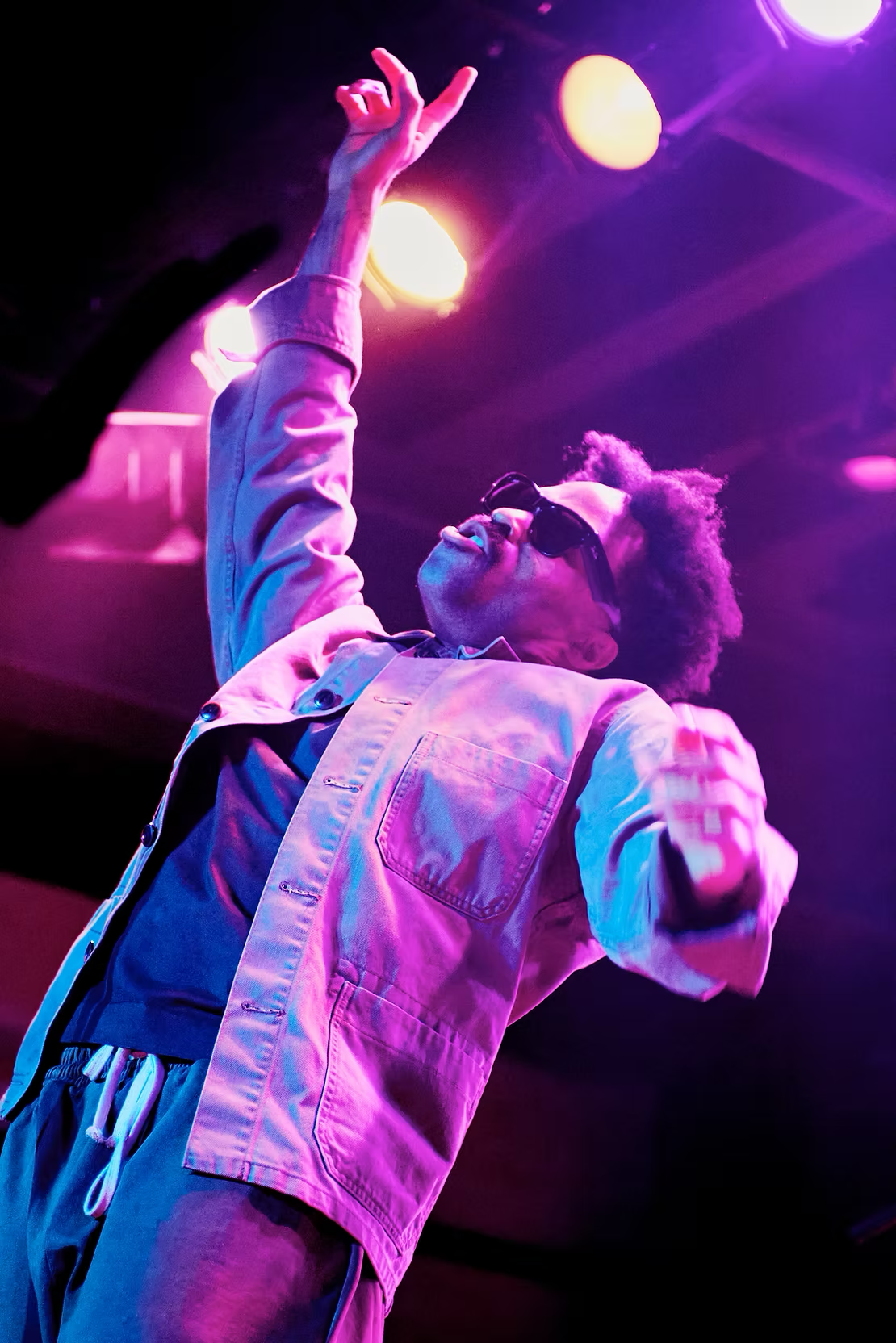
Bilal performs at Antone's on Sunday, April 6, 2025. Photo by Shunya Carroll
Originally published in TxSoundsLike.com
Music’s ability to connect to our humanity can be the ultimate handshake to someone across the aisle. Music isn’t created in isolation. It absorbs and exudes the histories of our world.
Fifty years ago, Antone’s became a musical highway, linking the heart of Chicago blues with the cultural melting pot of the South. In 2025, platforms like Spotify and TikTok built digital roads, connecting the music of everyone’s world. But these new highways often make us forget that we still have the option to slow down.
Sunday night at Antone’s offered that chance. It showcased the enriching music of the Soulquarians collective through DJ P-Funk, Austin’s own Sketch, and Philadelphia singer-songwriter, Bilal. Slowing down was on the menu. Each performance pulled us away from today’s quick singles and trending audio’s. We swayed along with deep musical rhythms that drove through nostalgia.
Lead drummer of Sketch, James Alexander Adkins, performs on the Antone's Stage on Sunday, April 6, 2025. Photo by Shunya Carroll
When I first stepped into the venue, DJ P-Funk was spinning “Bag L Bilal is one of many artists who created with the Soulquarians collective. The trio of D’Angelo, Questlove and J Dilla brought artists to the east coast to innovate. Erykah Badu from Dallas, Q-Tip from New York City, Common from Chicago, Jill Scott from Philly, and others would visit Jimi Hendrix’s Electric Lady Studios in New York repeatedly to record together.
Sheffield gave Bilal the 2000 lead single, “Something to Hold” and swore it was recorded at Electric Lady, but Bilal insisted it was actually at Sony Studios.
The group quietly disbanded in 2015 over various commercial reasons, but members continued collaborating. The sound of the late 90’s and early 2000s was shaped by their musical ideas. And it’s those ideas, not necessarily the sounds, that continue to define the eras, even if they haven’t broken into the mainstream like Sketch.
He jumped between jazz and rock like it was second nature. His performance was playful and fun. At one point, he filtered screeching vocals through a voice modulator that brought out some chuckles from the audience—it was weird, but it worked.
He sounded modern in a way that you could listen to him 25 years later and it still feels fresh. We can only wait to see if his musical ideas stand the test of time.
Like Sketch, Bilal’s Sunday night performance strafed into rock with a standard setup: Joe Blacks on drums, Tony Whitfield on bass and Randy Runyon on Guitar. This could have been a lineup for heavy metal, blues, or country band, depending on how the instruments were played.
Sheffield was amazed that Antone’s showcased many of the greats – and now Bilal. This year marks their 50th anniversary, and they plan to host performances that reflect on their past while imagining their future. Sheffield hopes Bilal’s performance will pave a new road for other East Coast artists, like Questlove, to stop by. With their track record, the 1975 venue, might just make that wish come true.
ady” by Erykah Badu on the turntables. He scratched and mixed in East Coast soul, R&B and Hip-Hop until Sketch began. He connected the strings between Bilal’s friends, musical inspirations, and their influence on today’s music.
“This is the foundation of all [today’s music],” said Jabbar Sheffield, founder of Music is on the Menu, the promotion company that brought Bilal and Sketch to the Antone’s stage.
“They got Muddy Waters, B.B. King and now they got Bilal,” Sheffield said.
The 250-capacity venue created a personal connection with Bilal’s performance. His setlist spanned from his 2001 debut album, 1st Born Second, to his latest record, Adjust Brightness. The crowd sang along to nearly every song as Bilal’s church-raised vocals bridged past, present, and future.
“You know I do it,” Bilal sang to the crowd before taking off his jacket and dancing with audience members in front row, who seemed to have followed his whole career.
For KUT News in Austin, Texas.
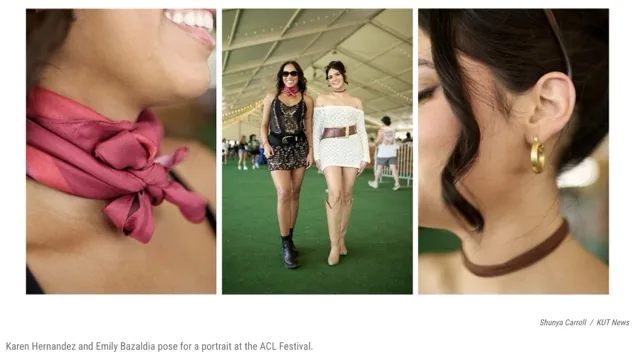
The Austin City Limits Music Festival wouldn't exist without the fans. And whether it was a love of Sabrina Carpenter, Doechii or Luke Combs that brought them to Zilker Park, they all had their own style.
In addition to the music fans, there were also the bartenders and security guards behind the show. The people of ACL were kind, hard-working, music-loving folk.
Here's a look at the people who power Austin's $535 million music festival.
Originally published on Reporting Texas
The Austin Parks and Recreation Department is moving forward with replacing the Dougherty Arts Center in South Austin despite uncertainty over funding for the two-phase development plan, the parks department said in a recent memo.
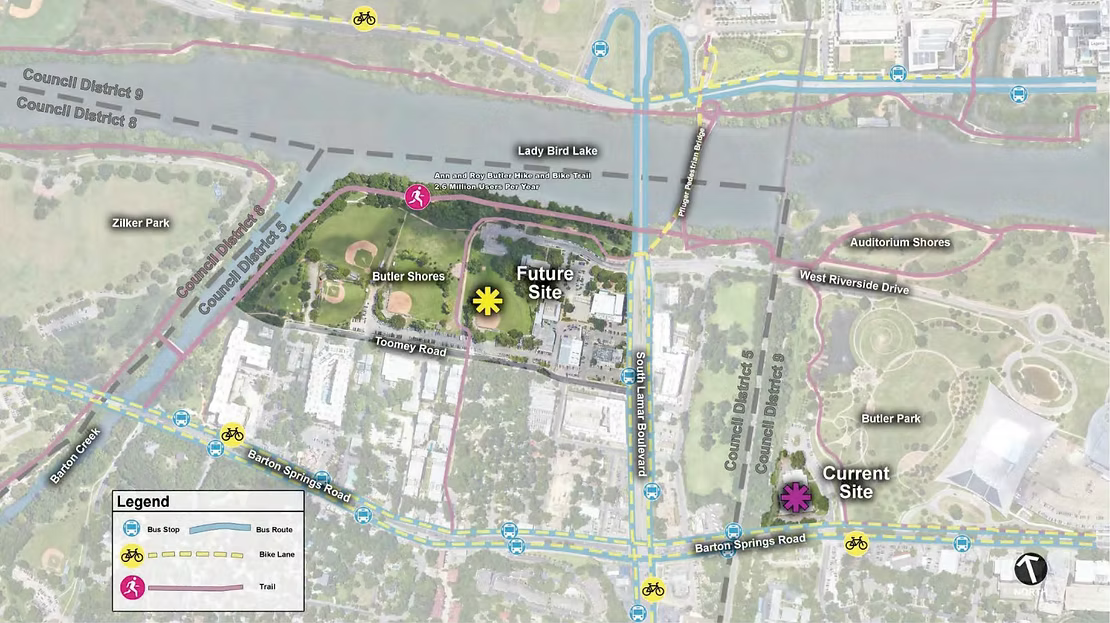
The proposed arts center’s campus would include a Smithsonian-caliber gallery space, a 2,600-square-foot black box theater and studio spaces and classrooms. The campus is planned to be built next to the parks department’s office west of Lamar Boulevard between East Riverside Drive and Toomey Road, adjacent to the ZACH Theater
The Dougherty arts center future site will sit along Lady Bird Lake and S. Lamar Boulevard, courtesy of Austin parks and recreation department.
The Dougherty’s current building on Barton Springs Road sits on a sinking landfill and received an “untenable” designation from a conditions assessment in 2010. The Dougherty was built in 1947 as a temporary Naval and Marine Reserve Center and donated to the city in 1978.
The current building has a host of issues, including disintegrating plumbing, failing roofs and Americans With Disabilities Act issues, according to Laura Esparza, former division manager of the parks division of museums and cultural programs.
“(The Dougherty) is pretty essential to Austin’s art ecosystem,” Esparza said. “It’s the place where many artists get their start. It has 30 exhibitions a year and many artists have the opportunity to have their work shown, sometimes for the first time.”
Multidisciplinary artist Daniel Llanes, 75, began his Austin career at the Dougherty shortly after it was acquired by the city in the early 1980s.
“The Dougherty was very supportive of me as an artist,” Llanes said. “For years and years and years the Dougherty was almost the only cultural facility that the city of Austin had. It has history. Nobody else has history like that. It has history like the Armadillo World Headquarters had history. It has history like the Gaslight Theatre had history. It has history like the Victory Grill has history.”
Esperanza says the building’s redevelopment project has been a long time in the making.
The new Dougherty Center will grant even more programs to Austinites than were previously available. The 56,000-square-foot building was designed by Studio 8 in conjunction with Dougherty staff over three years of community input. The project design document says it incorporated Austinites’ feedback to serve a rapidly growing city and “to create a future-oriented arts center.” The new space would open new programs for photography, welding, textiles, jewelry and more.
Lucky Lemieux, president of the Friends of the Dougherty Arts Center, has worked closely with Dougherty staff, the city and community on the redevelopment project since 2012.
“It made a big difference that the people served by the art center were in favor of its design and its location,” Lemieux said. ”It's going to be able to serve a lot more people than it has in the past. It will be able to offer more programming and more services.”
Rendering by Studio8 of the new Dougherty Arts Center near 200 S. Lamar Boulevard. Courtesy of the Austin parks and recreation department.
Lemieux says the new design gets pretty close to meeting Austinites’ wish list for an arts center. In addition to room needs, the redevelopment team asked community members about the current feeling and character of the Dougherty Center. Feedback described its kitsch charm and creative spaces to be important. “I want to amp up the professional standard we hold ourselves to, which a new building will do. But no matter what, I want people to always feel joy here,” said one respondent.
Lemieux says the proposed location next to Butler Shores provides more opportunities to collaborate with the neighboring Zach Theatre.
The new development will be split in two phases, according to Austin Parks and Recreation Department project manager Alyssa Tharrett. She says phase one will construct the building’s shell and parking structure funded by a $20 million bond approved by voters in 2018. Construction aims to begin before the end of 2025.
The second and final phase of the project has yet to acquire funding for the estimated $30 million price tag. The parks and recreation department is working to include the project in a proposed 2026 bond election. If the bond does not pass, the building’s shell will remain empty until the parks department gets additional funding, Tharrett says.
The Austin City Council has not yet voted on the two-phase project plan, but Lemieux says forward movement is urgent.
The parks and recreation department began planning the center’s reconstruction in 2008 and completed initial designs in 2017 with a $28.5 million budget. Tharrett says the cost has grown to about $60 million because of higher construction costs following COVID-19-related delays.
“The (Dougherty Arts Center) isn’t going to hold up anymore, and it could be closed any time,” Lemieux said of the current building’s structural integrity.
Originally published on ReportingTexas.com
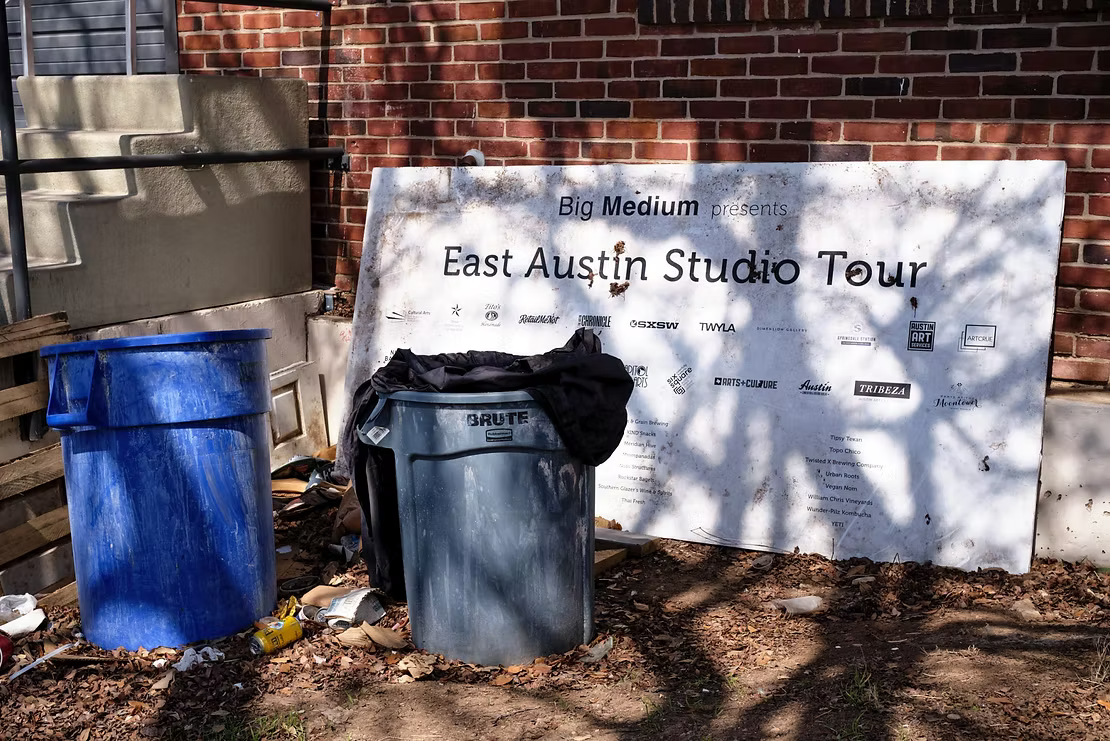
An Austin arts institution, Big Medium started with the East Austin Studio Tour; a discarded sign sits outside its former South Congress building on Feb. 28, 2025.
The future of the Austin studio tour is uncertain after the event’s founder and organizer, the arts nonprofit Big Medium, announced its closure last week.
“The gaps are massive,” said Shea Little, a founding member of Big Medium. “There are a lot of artists, a lot of creativity, but not a lot of opportunities for those artists to be seen.”
The Austin studio tours, begun in 2003, had helped artists and audiences find each other, drawing thousands to artists’ work studios and galleries over a couple of weekends each year. After years of success, founders Little, Joseph Phillips and Jana Swec merged to create Big Medium, the art nonprofit umbrella encompassing numerous projects that supported contemporary artists in Texas.
But Big Medium announced Feb. 22 it would close down, citing financial struggles.
“This has not been an easy choice, but it comes after many years of financial hardships and tireless efforts to renew and rebuild Big Medium with limited resources.” the organization said in a statement on its website. “Over the past few years, Big Medium has faced an increasingly difficult financial landscape. Major sponsors, including the City of Austin, have redirected their funding priorities, leaving significant gaps in our budget.”
Its flagship program, the Austin Studio Tour, invited the public to over 450 artists’ studios last year.
“You can come see where the art is being made. Where it happens, as it happens,” Little said.
According to their website, the studio tour had generated more than $1 million each year in direct sales for artists. The art nonprofit said the tour “will continue in some form or fashion” but did not respond to emails about its future.
GD Wright of Good Dad Studios is adamant that the studio tour event will not disappear.
“It’s a hallmark for the year for a lot of artists in Austin,” Wright said. “Most studios are only open for just that event. It’s validating their quest as artists and is too important to artists for it to go away.”
The Austin studio tours initially focused on East Austin. Little said it was important to celebrate the art being made there because of Austin’s racial divide and the area’s burgeoning arts scene. Many studios were close enough for Big Medium to create walking and bike routes for the tour.
The tour expanded to reach outside of the East Austin neighborhood, and Big Medium provided other opportunities to artists through the 2024 Texas Biennial, Tito’s annual art prize (sponsored by Tito’s Handmade Vodka), LINE Hotel residency and rotating art exhibitions. Texas Biennial will continue to operate under former Big Medium’s artistic and creative director, Coka Trevino, while It’s unclear if the Tito’s art prize or the LINE Hotel residency program will continue through other avenues.
LINE residency artist Love Muwwakkil said she hopes programs like the residency and Tito’s art prize will continue. The LINE Hotel declined to comment.
Trevino curated exhibitions that showcased Texas artists, while also bringing in artists from places like New York and Mexico for external points of view.
“We made the gap between commercial galleries and museums a lot smaller,” Trevino said. Big Medium, she said, “was for emerging artists who did important and interesting work. Having a show with us gave them more experience to then be able to work with a museum.”
Artist Hailey Gearo said the studio tours helped her find collectors and connect with new audiences.
Artist Bill Tavis began participating as part of a group through MakeATX in 2017 and again this past year with his own studio, and said he was disappointed when he saw the news via Instagram. “I began going to the studio tours in 2013,” Tavis said. “It was a good way to see the different art people were making and see what there was in the city.”
Originally published in ReportingTexas.com
When the accordion came to Texas in the tail end of the 1800s, a new sound emerged that became so familiar that it became synonymous with Tejano music. Conjunto was born.
“This is special. This is Texas music. You can’t find it anywhere else,” said Piper LeMoine, communications director for Austin nonprofit Rancho Alegre. “You can’t separate the music from the culture and community that celebrates it.”
Rancho Alegre was awarded a National Endowment for the Arts grant for preserving and celebrating conjunto music for Austin’s east-side community.
But in February, its $10,000 Challenge America grant was canceled when the Trump administration directed federal agencies to remove diversity, equity and inclusion-adjacent programming.
To comply with President Donald Trump’s January executive order “Ending Illegal Discrimination and Restoring Meri-Based Opportunity,” the NEA removed its 2022-2026 Equity Plan and canceled grants to 280 nonprofits that worked to extend their reach to underserved communities.
The NEA has established new compliance guidelines to enforce the executive order, but its vagueness is prompting some public agencies to be over compliant when no anti-discrimination laws were broken.
The National Council of Nonprofits has suggested that nonprofits “review their programs and contract language immediately as it pertains to the various executive orders.”
LeMoine said changing such language at Rancho Alegre would sanitize its mission and history but said she will do what the grant requires to secure funding. It is unclear what would fall under discriminatory DEI practices.
“I don’t know if I can say if our program is in Spanish,” LeMoine said. “I don’t know if I can say performer names because they’re in Spanish. Do I make it vanilla? Do I make it not special? That’s where it’s kinda going.”
As Central Texas nonprofits voice concern over losing funding, individual donors have rallied around the groups. In March, Central Texas fundraising event, Amplify Austin, said it saw the largest number of participating nonprofits in over 13 years. I Live Here I Give Here organizes the event and said this year’s large numbers reflect the fear nonprofits have.
“This year is particularly important to support nonprofits because of the finite financial insecurity,” said Piper Stege Nelson, executive director of I Live Here I Give Here. “It feels 100 times more important to give back locally and focus on making an impact locally.”
Austin’s queer art conference and festival nonprofit, Outsider Fest, said reducing federal funding for arts projects is not new.
Back in 1989 during the AIDS crisis, the NEA withdrew funding for an art exhibition about AIDS for the work “Witnesses: Against Our Vanishing,” organized by Nan Goldin. The grant was only reissued after wide protest from artists including high-profile figures like Leonard Bernstein.
“We’ve seen this before,” Outsider Fest development director Chris Gwillim said. “The NEA and government have had a relationship with queerness that has been deeply difficult for a long time.”
The Austin Economic Development Department, which provides various grants with a similar mission to the canceled Challenge America grant, said it does not anticipate any immediate impact on its grants from the executive order since they do not receive federal funding.
“The City of Austin’s Economic Development Department remains committed to creating an inclusive and equitable economy that benefits all Austinites,” public information manager Carlos Soto said. “Our core mission remains unchanged: to support Austin’s diverse communities, including historically underrepresented groups, in ways that align with the City’s values and applicable laws.”
LeMoine said navigating funding for the future is uncharted territory, but she will continue the work to preserve and celebrate conjunto music.
“The pride and attachment people have to conjunto music is remarkable. It is inextricably linked to identity. It is in their heart,” she said. “Like zydeco it’s entrenched in the community it comes from.”
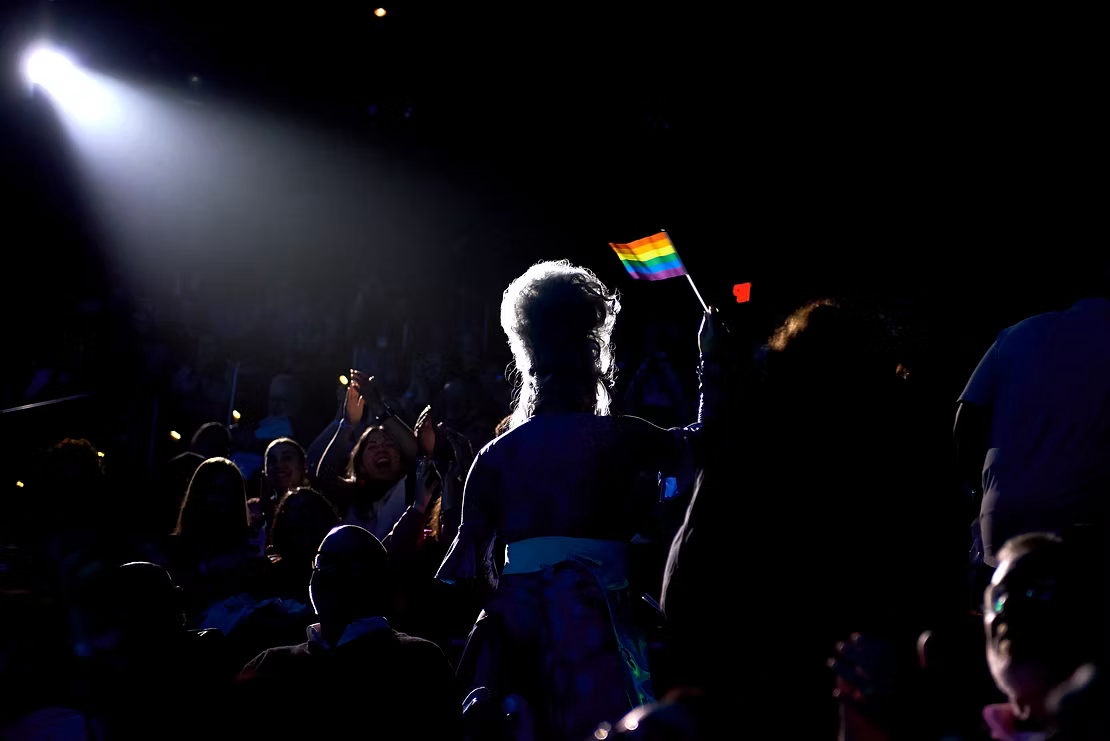
Maria Maria hit each choreographed step like an athlete. Her routine elevated classic New York voguing to a gymnast’s floor routine. The four to the floor pop medley was almost drowned out by the crowd’s cheering.
This wasn’t a national stadium tour. It was Draggieland.
The biggest drag show in College Station prevailed Thursday over Texas A&M University’s attempt to ban drag performances on campus. The Feb. 28 ban was quickly followed by a lawsuit against the A&M System Board of Regents.
On Monday, U.S. District Judge Lee H. Rosenthal, appointed by President Geroge H.W. Bush, ruled that the First Amendment prohibits such a ban by A&M.
“To ban the performance from taking place on campus because it offends some members of the campus community is precisely what the First Amendment prohibits,” Rosenthal ruled.
Attorney Adam Steinbaugh, who argued on behalf of A&M’s Queer Empowerment Council, which organized Draggieland, said the ruling was a victory for First Amendment rights across public universities.
Four time Draggieland paegent host Melaka Mystica entered the crowd during her performance and waived an audience member's flag on March 28, 2025 at A&M's Rudder Theater.
“The court reaffirmed that state university officials cannot block student expression they claim is offensive,” Steinbaugh said.
Six days before the ruling, University of Texas System Board of Regents issued a similar drag ban.
The ACLU is monitoring 527 anti-LGBT bills across America. Texas leads the nation with 80 anti-LGBT bills currently before the Texas Legislature.
The fifth annual Draggieland ran like many other Southern beauty pageants. Contestants introduced themselves, answered pageant questions, followed by a talent or performance portion and concluded with the crowning drag queen.
“Having an event like this can give hope that a student can find community here,” Queer Empowerment Council student president Sophia Ahmed told the Draggieland audience.
Drag subverts norms through presenting as a different gender. Exaggerated features, makeup, body suit padding and costumes are often handmade by the performer. Showrunner Angelo Rios challenged the A&M Board of Regents’ statements that drag was “inconsistent with the system’s mission and core values of its universities, including the value of respect for others.”
“(Drag) isn’t here to hurt anyone,” Rios said. “We’re here to put on a show that makes people laugh, happy and feel good.”
The 18+ show was met with group prayer outside of Rudder theater, according to a report by the Battalion, A&M’s student newspaper. Biological and agricultural engineering junior, John Leary led the prayer.
“Regardless of the court ruling, we are not in favor of Draggieland,” Leary told the Battalion. “However, we still love all those who are there. We will be praying for you, not attacking you.”
Draggieland MC Melaka Mystica did not address the protest group, but said she always has time to address misunderstandings about drag.
“I’m loud for the people who can’t be loud,” she said.
In the show's finale, judges tallied up scores and announced the top two queens, Maria Maria and Natasha Nova, would face off in a lip sync battle for the crown. The two channeled the steadfast energy of “Fight Song” by Rachel Platten. The crowd rooted for their favorite contestant along triumphant lyrics.
Like a small boat on the ocean
Sending big waves into motion
Like how a single word
Can make a heart open
I might only have one match
But I can make an explosion
Top two drag contestants, Maria Maria and Natasha Nova face off in a lip sync performance of "Fight Song" by Rachel Platten for the Draggieland crown on March 27, 2025.
After nearly four hours of glitter, costume changes and vogueing – the judges, hosts, show runners and contestants presided over crowning Maria Maria the 2025 Queen of Draggieland.
“Drag is art, drag is love and that is the message we spread,” shouted Maria Maria, who is from Houston. “Kindness is the thing that makes the world go round, so keep spreading that kindness.”
Draggieland contestant Maria Maria strides across the stage after she was crowned Quees of Draggieland 2025 on March 27, 2025 at A&M's Rudder Theater.
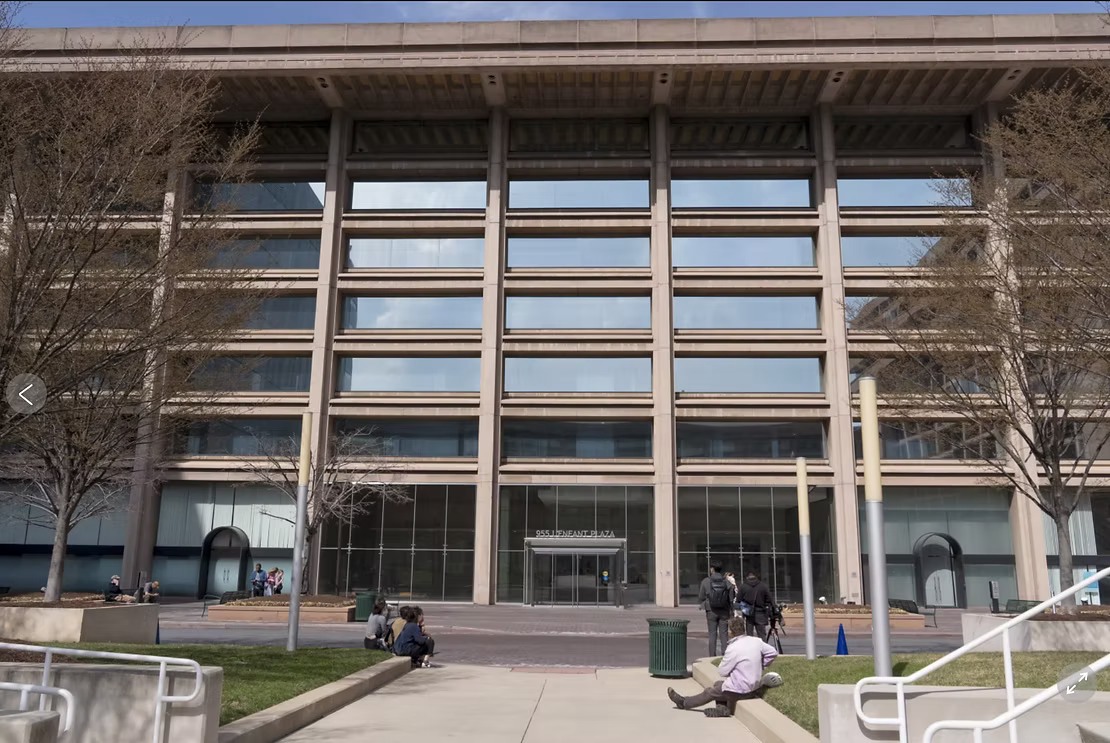
The Department of Government Efficiency mandated the Institute of Museum and Library Services staff to be put on paid administrative leave on March 31, 2025, freezing $454 million in undistributed grant awards to organizations across the county. Data used to write this story was gathered from usaspending.gov
The IMLS awards grants to institutions outside of its namesake. Universities, research centers, government agencies and others recieve funding from the IMLS. Funded projects include mentorships for library and information science students at the University of Texas, preserving artifacts of indigenous people (Livingstong County Historical Society) and digitize the Country Music Hall of Fame’s 1950s TV film negatives. In some states, universities make up a quarter of all grant recipients.
Data downloaded from usaspending.gov illustrated the agency’s history of funding. The Department of Government Efficiency aims to cut cost, restructure government agencies and establish transparent government spending. In the past 10 years, 24% of IMLS grants did not fully award their obligations. Over $107 million was not properly distributed.
Organizations that reside in Illinois have $17.8 million in undistributed grant awards, $4 million to Texas organizations.
DOGE publishes each grant, contract and lease that have been terminated. This could be a source for a future data project Could find undistributed funds from those cancelled grants
The termination of IMLS grants have not been confirmed or published by DODGE, but the department’s mandate put the agency’s 17 employees on paid administrative leave until further notice. The average employee is 67 years old and has worked with the agency for an average 21 years, according to DOGE.
Among current open grants, $454 million in obligations have not been distributed. The agency’s largest grant funds about a third of the Texas State Library who then distributes funds to Texas libraries as well, according to Dr. Lorraine Haricombe, Vice Provost and Director of UT Libraries.
“[On April 3rd] we got an update to say the IMLS board is now being dissolved.” Haricombe said. “Now that the board has dissolved and the block grants to the states have stopped, it’s not clear that they will honor the obligations for existing current projects.”
Texas organizations currently have $23.9 million in limbo.

After news spread that Swedish Spotify CEO, Daniel Ek became chairman and led a €600 million ($694) investment to German Weapons manufacturer, Helsing, artists publicly announced removing their catalog from the platform.
But why might Daniel Ek invest in war?
Since the Obama administration, the EU has been pressured to spend more on defense according to professor of Government at the University of Texas, Dr. Rachel Wellhausen.
“Europe is buying American weapons to supply Ukraine and for a long time have thought about a bigger domestic defense industry,” Dr. Wellhausen said. “Since Trump has pulled back on financing Ukraine, Europe is putting lots of money into Ukraine.”
Investments in defense has been made more attractive for private companies.
“It’s like this perfect storm for European companies and rich Europeans who care about Europe to build up (defense),” Dr. Wellhausen said.
Daniel Ek has been known to cash out Spotify shares to invest in other endeavors like health body scanners, but stepping into Helsing can be seen as a patriotic act.
“As Europe rapidly strengthens its defense capabilities in response to evolving geopolitical challenges, there is an urgent need for investments in advanced technologies that ensure its strategic autonomy and security readiness,” Daniel Ek told Financial Times.
Helsing delivered 10,000 AI powered drones to Ukraine as of February and is collaborating with Sweden’s military to defend Ukraine’s frontlines.
Last weekend, in spite of slow Russian frontline advancement, Ukraine declined Putin’s ceasefire deal to withdraw forces from regions Russia failed to capture.
Director of European Studies at the University of Texas, Dr. Michael Mosser says Ukraine’s natural gas pipelines and history in the Soviet Union can be traced as justifications for the war.
“Russia could impose its will on Ukraine in a way that it had done to other countries that tried to break away.” Dr. Mosser said, referencing Georgia in 2008 and Chechnya in 2004.
Zelensky has not been invited to Putin and Trump’s peace negotiations meeting that’ll take place in Alaska this Friday.
Missed political deadlines and uncertainty for support might be why the EU is looking at private investors for defense.
In 2024, American weapons manufacturers grossed $236 billion in government contracts, more than twice that of European defense. Although the EU primarily purchases weapons from U.S. manufacturers, Dr. Mosser says the EU is beginning to look at domestic producers.
Boycotting companies have impacted businesses in the past. The Kyiv School of Economics have published a webpage tracking companies’ financial relationships with Russia. P&G, Adobe and hundreds of others have suspended or reduced their activity in the country.
But the Spotify CEO says he doesn’t really care about the boycotts.
“I’m sure people will criticize it and that’s OK. Personally, I’m not concerned about it. I focus more on doing what I think is right and I am 100 per cent convinced that this is the right thing for Europe.” Ek told Financial Times
Musicians have dropped from the platform in attempts to decouple from war, but mainstream reports misrepresent Helsing’s connection to defending Isreal instead of Ukraine.
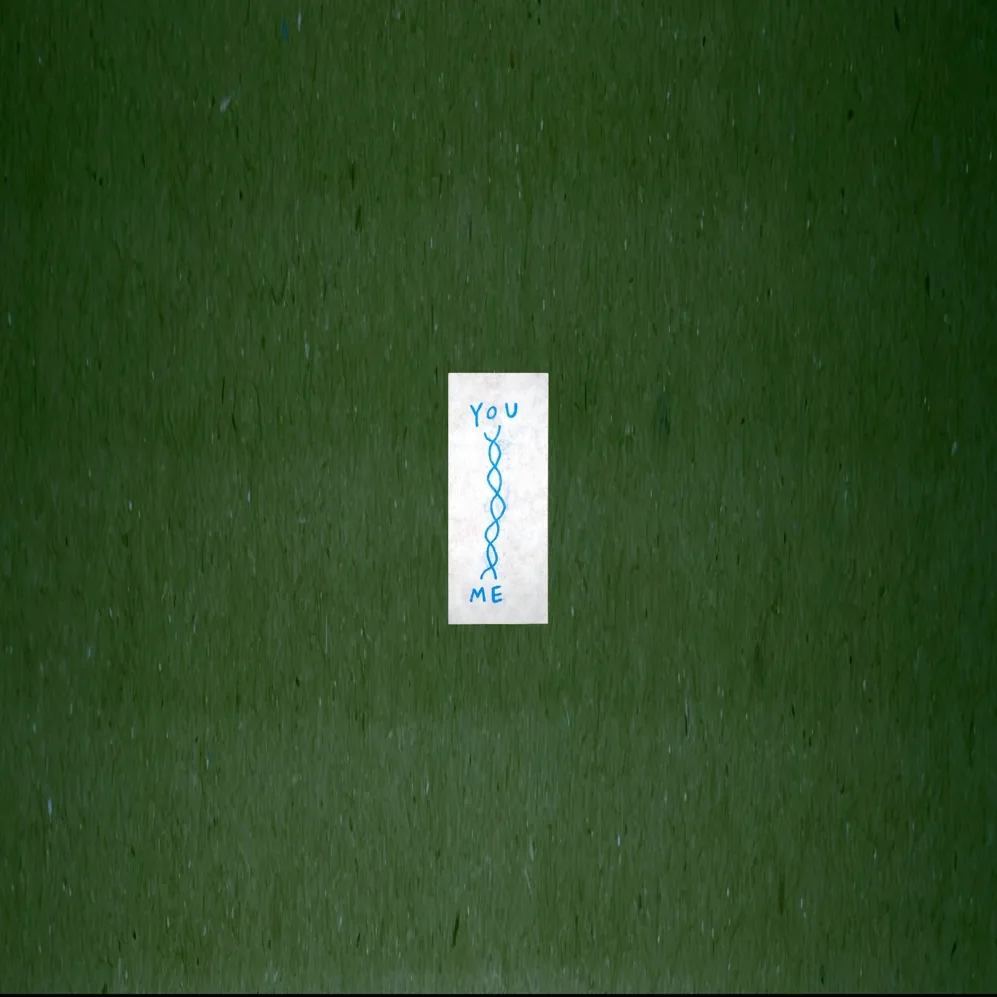
Fortune-cookie sized paper from Lorde's kickoff performance at the Moody Center in Austin, Texas on Sept. 19, 2025
There’s something special about going to a show with no previews from social media — no set-lists to satisfy curiosity or beautiful fomo inspiring photos. And that’s what all the Austin Moody Center buzz was about. Lorde began the Ultrasound tour in Austin, Texas Wednesday night, her first time doing so. Friends speculated what she’ll sing first or if she’ll sing their favorite tune. Will she sing a track from Melodrama? Solar Power? How about Pure Heroine? Most definitely Virgin.
“The mission of my life is to reveal more to you…Peeling off one layer at a time. That’s what I’m trying to do,” Ella Marija Lani Yelish-O’Connor shares halfway through her performance.
With her X-Ray revealing an IUD as the album cover, how can the New Zealand artist reveal even more?
Little is left for surprise in our social media age. Performers attempt to control the pacing of storytelling, but hype, clout and clicks burn away the stage curtain.
There were actually no curtains in this show (this is the last of the show spoilers).
When you go in blind, performance art feels like a cultural wave. You are at the zeitgeist’s summit. There is something larger than the sum of our parts in the 15,000 seat arena. An elephant in the room that can’t be seen, but has been felt since our time six feet apart.
The effects of social-distancing still linger. A distance normalized where technology has pushed us further than six feet. Lorde shows music and performance is part of the solution.
Her magic spurred a dance between surprise and confusion in the pit and birthed a nostalgic dance floor. But this was real and right now, no more looking back with rose-colored glasses.
And of the future. What do we all see if we dream of the future?
“We need tools now. And we’ve probably already made it,” Lorde tells Zane Lowe. “Let’s focus on the right now.”
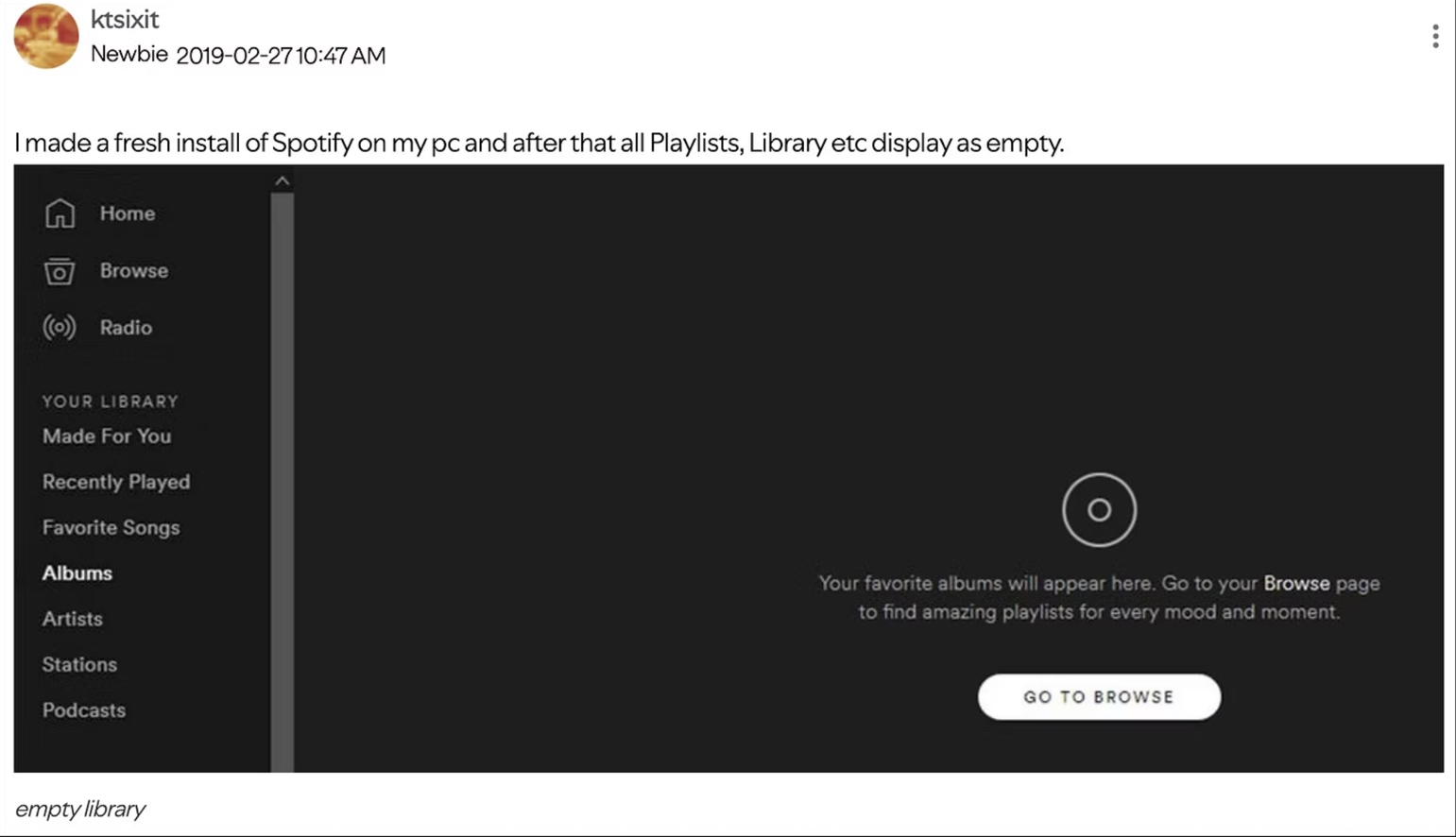
As we saw with Crowdstrike's outage in July, AT&T's massive data breach, and Amazon Web Services breaking, robust systems can fail. How would we act if our music libraries fail? Will we google how to fix it? Will we hope it fixes itself? Will we switch to a different streaming service? Will we rebuild?
You are stranded on an internet-less island. What do you have?
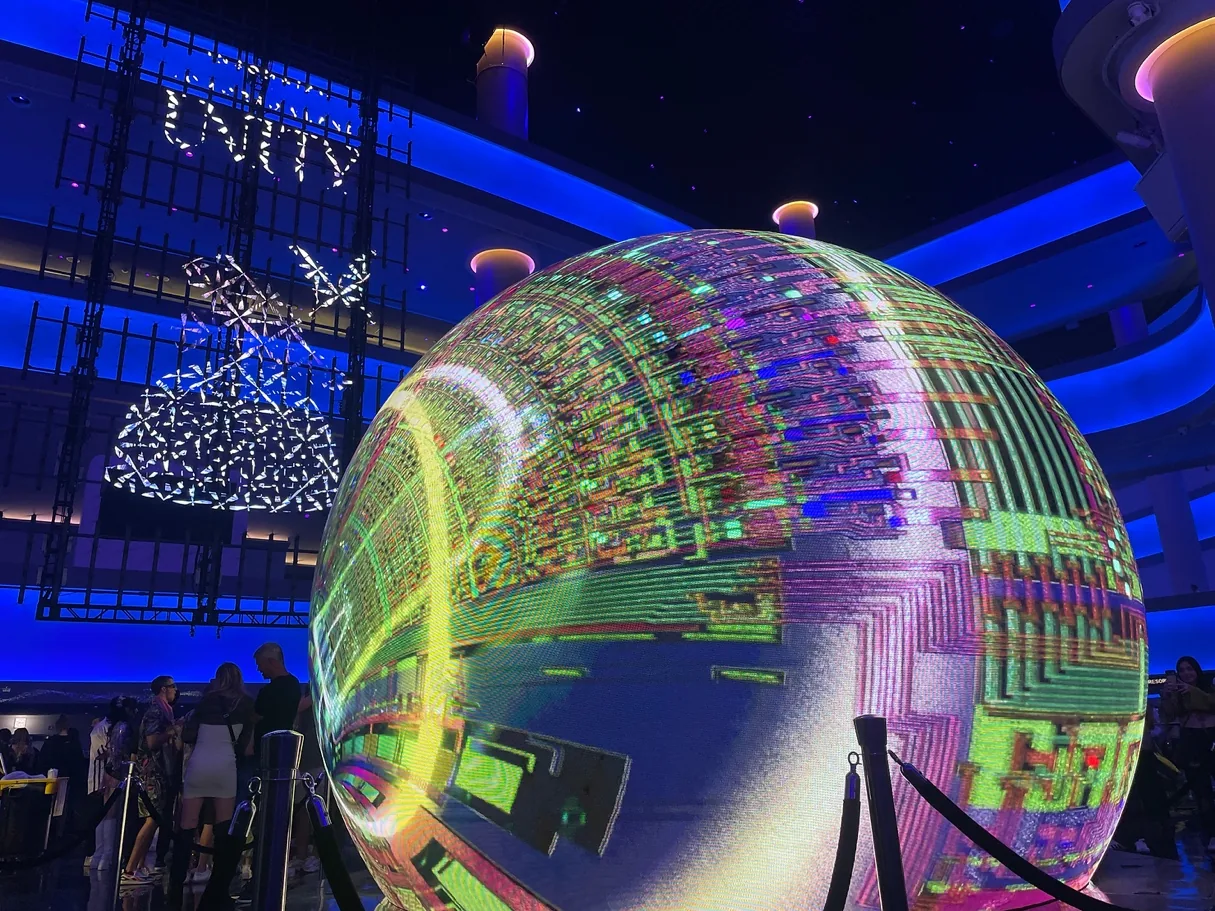
A digital sphere stands out in the atrium of the Las Vegas Sphere performance hall on Oct. 19, 2025. Shunya Carroll.
Originally Published on CoolHunting.com
It’s easy to get lost in the Venetian hotel’s casino maze, but once we heard the EDM playing we knew we were on the right track. Pathways and beats ushered Subtronics jerseys and fluorescent rave braids to the adjacent Sphere. Festival crews from all over the U.S. reunited for a one-of-a-kind experience under the 16K resolution electric sky.
Tomorrowland and Insomniac, two pillars of electronic dance music known for their expansive music festivals across the world, joined together in October 2025 at the Las Vegas Sphere for Unity, for their first collaborative project. Led in part by Belgium-based production studio Prismax, the 30-person creative team built brand new systems just for this project.
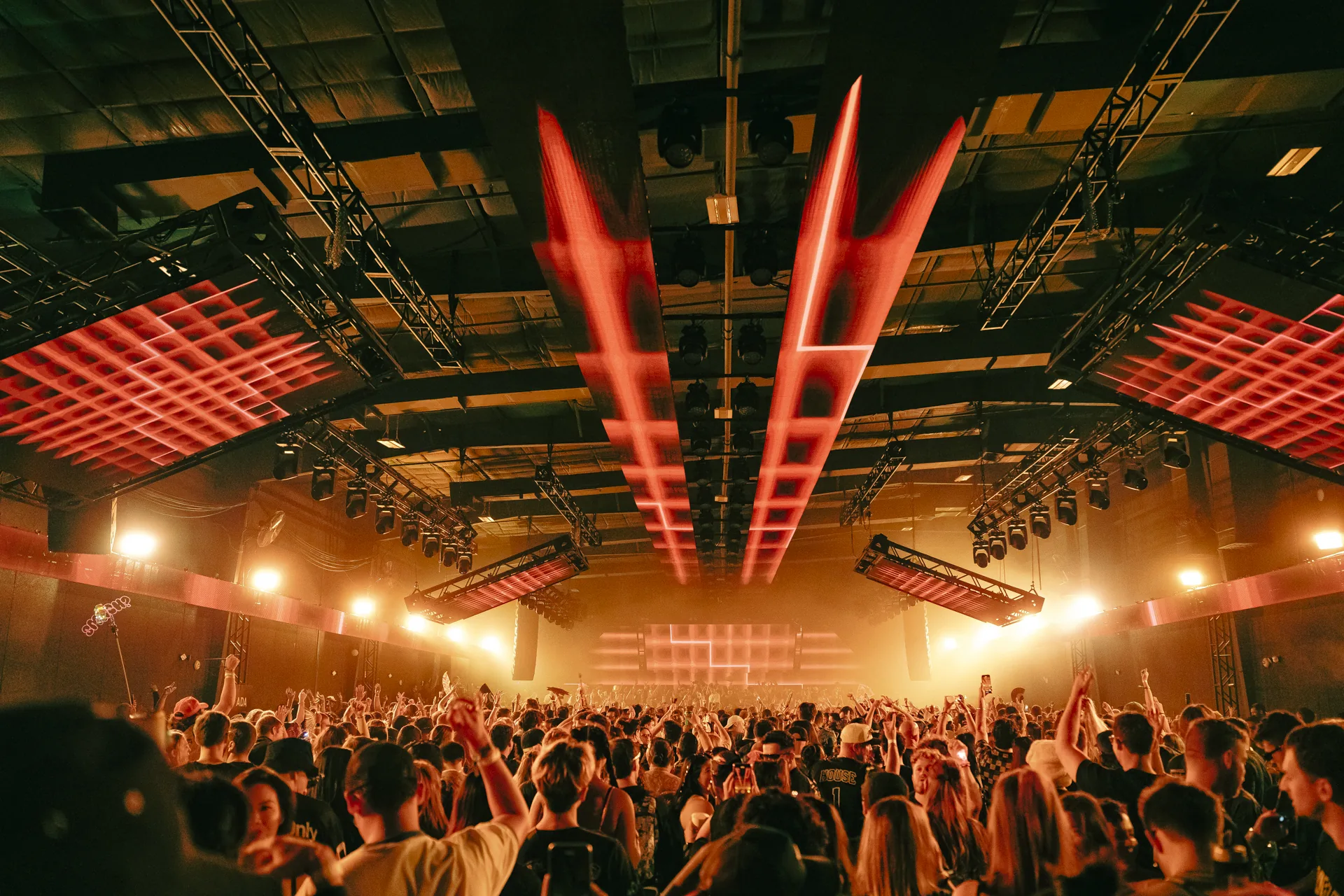
The venue’s immersive, nearly 360-degree screen and story-telling technology is the ultimate venue to push video and art. Project Unity reimagined Tomorrowland’s fantasy worlds and Insomniac’s dedicated music festivals. The 165-minute film, orchestra performance and DJ set combined animation with physical special effects for an immersive experience that can only exist in the Sphere.
Collaboration between the international festivals came about from a simple phone call. Both Insomniac and Tomorrowland were looking to put on a show at the Sphere.
The Prismax production team built their fantasy worlds Planaxis, Adscendo and Orbyz while Insomniac animated Beyond Wonderland, Escape Halloween and Electric Daisy Carnival. Together, they’ve created their biggest animated project that rivals a feature-length film, but with more dancing.
Prismax CEO Joris Corthout said the Sphere’s resolution is 16,000 by 16,000, and this film project is 64 times the resolution of an average movie theater screen. Rendering the project required Prismax to build specialized hardware infrastructure to meet its technical demands. The team’s new rendering farm supported the petabyte-sized project—over 1 million gigabytes—and future projects at the Sphere.
The massive Unity tree that opened and closed the show ran in real time on Unreal Engine, a creation tool typically used for video games. The program allows a video jockey or VJ to animate live with a performer.
The seats rumbled with every drop, scents wafted in via massive vents and animatronic flying butterflies reminded us how beautiful today’s technology can be. The orchestra united the timbre of classical instruments with electronically-produced beats, nature united with technology and music unified the headliners of tomorrow. Prismax has been leveraging technology to build experiences with Tomorrowland for 20 years and this was arguably one of its most impressive feats yet.
Rehearsals of the show took place at a scaled down “mini-sphere” in Los Angeles, but access was only given three weeks before the show. To test the 360-degree viewing experience during earlier production stages, Prismax built a replica in virtual reality. “We [could] visit the Sphere whenever we want.” Corthout said. “If someone was ready and we wanted to test it, you put on the goggles and you’re sitting in the Sphere.”
At the end of the Unity film, the Sphere’s 20,000 attendees applauded the orchestra’s curtain call bows. The harpist, strings, percussionists, brass and woodwinds waved to the crowd and introduced the night’s follow-up performance. Fans erupted throughout the auditorium.
Hailed for pushing the limits of sound system engineering, Subtronics rose to the DJ decks to perform an hour-long set of body-bending dubstep. Tenacious hands gripped the banisters and seats—anything sturdy enough became the holy rail for Subtronics’ dirty drops. He gave headbangers a break with Bon Jovi and Fleetwood Mac throwbacks, then returned to his bread and butter to give bass lovers what they really wanted.
A performance under the 16K resolution Unity Tree was taken over by the VJ. Big bass drops and lighter moments were synced. The iconic Subtronic cyclops also made a cameo, but this time it was 40 feet tall. “It’s all about bringing people together with music,” Corthout says.
The Sphere’s paradigm-shifting storytelling has inspired the construction of its twin space in Abu Dhabi. With its new hardware infrastructure, Prismax is excited to create worlds for the only venue on Earth that can match its endeavors.
Originally published on Coolhunting.com
Once only found in the underground, electronic dance music now sells out mainstream stages at Coachella. For some, throwing successful parties is serious work—and a serious time commitment. Kelly Gray and Andrew Parsons started out in 2005, promoting events for 800-square-feet dance floors in Austin, Texas. Today, their venue, The Concourse Project, is ranked 39th in DJ Mag’s Top 100 Clubs global list, competing against venues in Ibiza, New York, Berlin, Las Vegas and more.
The Concourse Project sits on the edge of Austin’s city limits, creating a different flavor for the live music capitol of the world. Their programming put Austin on the EDM map and facilitates the Texas nightlife industries.
Photo Courtesy of Concourse Project by Shannon Mack
“I think Austin has become a place to come and write music and be an artist. Not just your LAs and New Yorks, right?” Parsons said. “Dance music-wise, more and more people are making [Austin] their home and creating here.”
The city is home to Live Nation-C3 presents, PBS’s Austin City Limits and of course The Concourse Project, but other big Texas cities have also made a name for themselves in the EDM space. Houston’s ART Club blends big names with home-grown Southern culture. Ice House Radio creates offline third spaces that connect community. Dallas’ It’ll Do Club brings dance music legends to a tucked-away neighborhood. SILO Dallas transformed a historic grain silo into a 3,200-capacity club that also landed them on DJ Mag’s top venues list.
“This is such a community-based industry,” Gray says, and “Austin is an incubator for dance music professionals. It’s becoming a hub. We take pride in having strong local DJS and being able to give [them] opportunities.”
Grey and Parsons also produce their annual house and techno festival, Seismic Dance Event. This year, headliners Four Tet, Mochakk and The Blessed Madonna shared the bill with curated emerging talent. Over 500 underground DJs came across Grey’s desk to potentially play for the festival.
Texas DJ XOY opened for Berlin-based artist HorsegiirL and curated opening acts for Ru Paul, while Houston-based DJ Amarji King supported Zack Fox’s show.
“It was a big opportunity for me to represent Houston girls, trans girls, black girls, indigenous girls in electronic music,” XOY says.
Spotify USA became the defendant of two separate class action lawsuits filed by Eric Collins aka RBX and Genevieve Capolongo in November. The complaints claim Spotify turns a blind eye to bots artificially inflate streaming numbers and for exhibiting illegal payola “pay-to-play” business practices.
Streaming Bots and click farms -Collins v. Spotify (filed Nov. 4, 2025)
Eric Collins aka RBX claims “Spotify deliberately turns a blind eye to fraudulent streaming because Spotify benefits from th “This fraudulent, and often bot-supported streaming dramatically and improperly increases the revenue share for a select number of artists and publishers, while it diminishes the shares for other Rights Holders whose music is streamed by legitimate users.”
“Spotify accounts for roughly a quarter of global recorded music revenue” and paid out nearly $60 billion to the music industry at the end of 2024 according to Spotify’s 2024 financial report.
Spotify’s Monthly Active Users is a key performance indicator they use to attract investors and measure financial success. SEC filings show they had 696 million monthly active users as of this June. What would it mean if a significant portion of these are artificial?
Spotify claims heavy investments in “detecting, preventing and removing the royalties impact of artificial streaming. In 2024 they introduced a policy to charge labels and distributors caught using artificial streaming.
Spotify can detect bot activity through irregular user activity like streaming from multiple countries in a day or abnormal listening behavior.
Illegal Payola “Pay-for-Play” - Capolongo v. Spotify (filed Nov. 2, 2025)
Payola became illegal in 1960 after radio stations were being paid to play music without disclosing it was sponsored. The class action lawsuit cite industry insiders admitting songs can cost “between $2,000 for playlists with modest followings and $10,000 for the largest” editorial Spotify playlists.
Eric Collins aka RBX claims “Spotify deliberately turns a blind eye to fraudulent streaming because Spotify benefits from the increased number of overall music streams generated by Bot accounts and other fraudulent means.”
Spotify’s Discovery mode is driven by algorithms and user listening behavior. The 2023 feature launched the streaming platform into its first profitable year ever according to their 2024 Q4 earnings report. Discovery mode at takes a 30% commission from the platform’s already lowest in the industry royalty rates.
The lawsuit claims “Listeners are never told when a track has been promoted through the program, creating the false impression of neutral, personalized recommendations when financial incentives are quietly driving the algorithm.”
Why Artists Should Know
Streaming metrics are used in award considerations, Billboard Hot 100 charts, record deal contracts and opportunities for emerging artists. The result of these lawsuits will inform music industry professionals of all levels the true value of the streaming era’s most important data points. If you’re part of the music industry, please share how streaming numbers affect your career.
What can we learn from music in 1976? In the Billboard Hot 100 we can find John Sebastian’s “Welcome Back” at no. 1, Diana Ross’s “Love Hangover” at no. 7 and Queen’s “Bohemian Rhapsody” sitting at no. 11. Nowhere in the charts you will find Earth’s most beloved Rastafarian. His eight studio album continues as a voice for peace while naming humanity’s turmoil. In 1976 we were electing the first president after Nixon’s resignation, recovering from the Vietnam War and fighting another on communism.
Rastaman Vibration uniquely adopted modern synths and rock to launch the unmistakable sound of Bob Marley and the Wailers deep into humanity’s memory.
<iframe width="937" height="527" src="https://www.youtube.com/embed/b0DU5uhoq-4" title="Positive Vibration (1976) - Bob Marley & The Wailers" frameborder="0" allow="accelerometer; autoplay; clipboard-write; encrypted-media; gyroscope; picture-in-picture; web-share" referrerpolicy="strict-origin-when-cross-origin" allowfullscreen></iframe>
Hand drums introduce use to laid back guitar riffs and palm tree synths. Life is easy, but only if we make it that way. Intro track “Positive Vibrations” reminds us of our agency over our lives.
“If you get down and quarrel every day
You’re saying prayers to the devil, I say.”
Bob Marley & the Wailer’s simple salt-breeze sound carries lyrics critical of 1976 Jamaican social engineering. Tactics that can be felt in many countries around the world. Want More warns us of greed while guitars and drums foretell a punishment a few steps behind. Crazy Baldhead reclaims the fruits of labor stolen by oppressors. Johnny Was memorializes the victims of collateral damage.
Hand drums introduce each social vignette.
Rastaman Vibration’s strength rests in its message. Ten years before the album, Ethiopian Emperor, Haile Selassie, addressed the world’s pain to the United Nations which would fuel the lyrics to War. The strongest track on the album would live on fuel sentiments for the next 49 years.
Twenty-some years later, Sinead O’Connor would perform War to address the pain of systematic child abuse in the catholic church to Saturday Night Live. Because her performance exposed abuse a decade before the Boston Globe, she was met with amplified criticism.
<iframe width="779" height="584" src="https://www.youtube.com/embed/wrkdWXmvl68" title="Sinead O'Connor - War (SNL 1992)" frameborder="0" allow="accelerometer; autoplay; clipboard-write; encrypted-media; gyroscope; picture-in-picture; web-share" referrerpolicy="strict-origin-when-cross-origin" allowfullscreen></iframe>
The hurt and healing wrapped in the Rastafarian album was hopeful of a humanitarian future. What have we learned since 1976 and what can we learn from listening to the voices of the past? We have not forgotten about Bob Marley nor the distress he sang about. While the Earth no longer hosts the Jamaican's unifying voice, his memory can inspire actions to engage, understand and unite.
Just as the Vietnam War, Watergate and the Cold War have been carved into Humanity’s memory, today’s wars will be too.